



Best Time of Year to Replace a Roof in Colorado Springs
If your Colorado Springs roof is on its last legs, the calendar matters more here than in a lot of the country. At 6,000 feet, this city gets real winters, a long hail season, and a demand cycle that swings hard with the storms. The short answer is that fall is usually the best window. The honest answer is that the right time depends on your roof, your urgency, and your budget.
We are Patriot Roofing, a locally owned company based in Pueblo that works throughout the Front Range, including Colorado Springs. This guide breaks down each season the way it actually plays out here, so you can time your replacement well. This is general information, and timing depends on your specific roof, so get an inspection before you commit.
Why season matters in Colorado Springs
Two local realities drive the timing. First, temperature. Asphalt shingles seal best when it is roughly 40 to 85 degrees. The adhesive strips on the back of each shingle need warmth and sun to bond, and in the cold they stay brittle and slow to seal. Colorado Springs winters regularly drop below that range, which is why cold-weather work takes extra care. Second, hail. The city sits in one of the most hail-prone areas in the country, per NOAA’s National Severe Storms Laboratory, which the federal hail risk data confirms, and hail season runs from about mid-April through September. That season shapes both the weather risk and the contractor backlog. For broader storm preparedness, FEMA’s Ready program is a useful resource, and you can confirm local permit requirements through the Pikes Peak Regional Building Department.
Season by season in Colorado Springs
Here is how the four seasons compare for a roof replacement in the Springs.
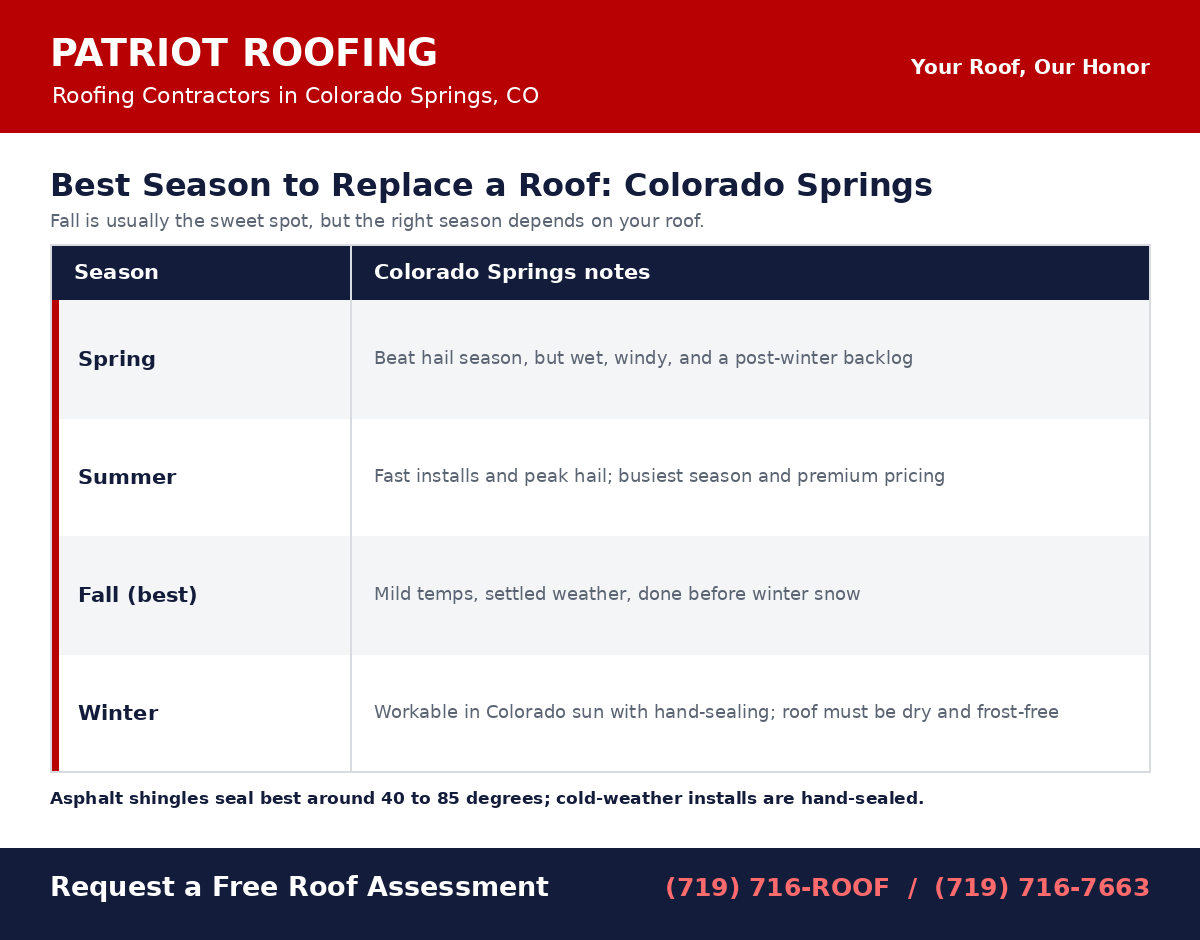
Spring lets you beat hail season, which is a real advantage, but Colorado Springs springs are wet, windy, and unpredictable, with snow possible well into May, and crews are working through a post-winter backlog. Summer brings fast installs and long daylight, but it is peak hail season, especially around July, and it is the busiest and most expensive time to hire. Fall, roughly September through early November, is the sweet spot: mild temperatures, settled weather, good shingle sealing, and a finished roof before winter. Winter is workable here thanks to the city’s abundant sunshine, but it requires cold-weather technique, the roof surface has to be dry and frost-free, and work happens during the warmest part of the day.
Why fall usually wins
Fall lines up three things that rarely coincide: temperatures in the ideal sealing range, relatively settled weather between the end of hail season and the first hard snow, and crews that have worked through the summer rush. Your shingles seal properly, the job is less likely to be rained or hailed out, and you head into winter with a brand-new roof. For most non-emergency replacements in Colorado Springs, fall is the window to aim for.
When you should not wait for fall
Timing is a luxury you only have if the roof can wait. If you have an active leak, storm damage, or a roof that is clearly failing, replace it now, whatever the season. A compromised roof through a Colorado Springs winter means snowmelt, ice dams, and interior damage that costs far more than any seasonal premium. And if the damage is from hail, it may be a covered insurance claim, and the Colorado Division of Insurance explains how carriers handle it, so see our guides on what hail damage looks like and how to file a hail claim. Cost should not force you to wait either, since we offer flexible roof financing.
Contractor availability is the hidden factor
The calendar is not just about weather. It is about who is available. In Colorado Springs, demand swings dramatically with hail season.
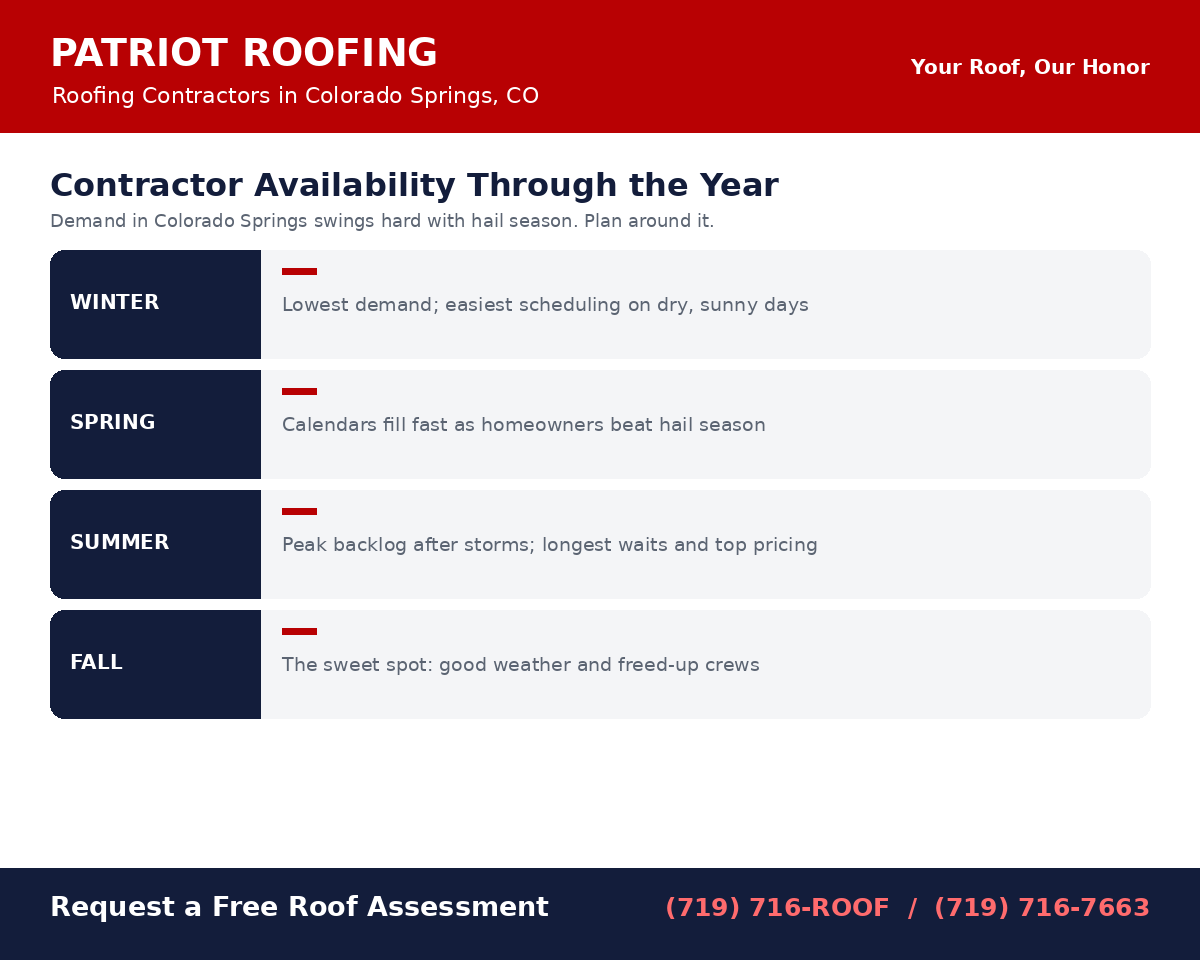
Winter has the lowest demand, so scheduling is easiest on dry, sunny days. Spring calendars fill fast as homeowners try to beat hail season. Summer is the worst backlog, with the longest waits and top pricing right after storms. Fall frees crews back up while the weather is still good. If you can plan ahead, booking in a lower-demand window gets you better scheduling and often better pricing, which is a demand effect rather than a discount. Spring, before the rush, is often the most economical window.
Can you replace a roof in winter in Colorado Springs?
Yes, and sometimes you should. There is no official minimum temperature for asphalt shingles, but below about 40 degrees the sealant strips may not activate right away, so a good roofer hand-seals them with roofing cement, stores shingles warm, and works during the sunniest, warmest part of the day. Colorado Springs actually gets a lot of winter sun, which helps. Impact-resistant, SBS-modified shingles also stay more flexible in the cold. Done right by an experienced local crew, a winter replacement is perfectly sound, and it stops a failing roof from causing winter damage.
Find Out If Your Roof Can Wait
Not sure whether your Colorado Springs roof can wait for the ideal season or needs to be done now? That is exactly what an inspection answers. We will get on the roof, tell you honestly how much life it has left, and help you time the replacement to the weather, your budget, and your insurance. No pressure, no obligation.
Request a Free Roof Assessment today by calling Patriot Roofing at (719) 716-ROOF, or reach us through our contact page. We serve Colorado Springs and the Front Range with residential roofing, storm damage repair, and both asphalt and metal installs. Planning for next season? See how to prepare your roof for Colorado hail season. Your Roof, Our Honor.
Frequently Asked Questions
What is the best time of year to replace a roof in Colorado Springs?
Fall, roughly September through early November, is usually best. It offers mild temperatures in the ideal shingle-sealing range, settled weather after hail season, and better contractor availability, so your roof is finished before winter.
Is spring a good time to replace a roof in Colorado Springs?
Spring works well for getting ahead of hail season, but it is wet, windy, and unpredictable, with snow possible into May, and crews are catching up from winter. It is a solid choice if you want to beat the storms and often the most economical.
Can you replace a roof in winter in Colorado Springs?
Yes. Colorado Springs gets plenty of winter sun, and experienced crews use cold-weather techniques like hand-sealing and warm shingle storage. The roof must be dry and frost-free, and work happens during the warmest part of the day. A failing roof should not wait.
What temperature is too cold to install shingles?
There is no official cutoff, but below about 40 degrees the self-sealing adhesive strips may not bond right away, and shingles get brittle. Roofers address this by hand-sealing with roofing cement and keeping shingles warm until installation.
What is the cheapest time to replace a roof in Colorado Springs?
Lower-demand windows, especially late fall through winter and early spring before hail season, tend to be the most economical. It is a demand effect rather than a formal discount, since crews have more availability.
Should I replace my roof before hail season?
If your roof is aging or marginal, replacing before mid-April gets ahead of the storms and the spring rush. A new impact-resistant roof also handles hail far better and can lower your insurance premium.
How long does a roof replacement take in Colorado Springs?
Many homes are completed in one to a few days, depending on size, pitch, and complexity. Weather and permitting through the Pikes Peak Regional Building Department can add time, so build in a buffer.
Does weather delay roof replacements here?
It can. Rain, snow, high wind, and hail all pause work for safety and quality. Fall and dry winter days tend to see the fewest weather delays, while spring and summer storms are more disruptive.
Is it worth waiting for the best season if my roof is leaking?
No. An active leak or storm damage should be addressed immediately, regardless of season. Waiting risks interior damage, mold, and ice dams in winter that cost far more than any seasonal pricing difference.
Do I need a permit to replace my roof in Colorado Springs?
Yes. The Pikes Peak Regional Building Department requires a permit and a final inspection, and your roofer must be registered with them. A reputable local contractor handles the permit and inspection for you.
Request a Free Roof Assessment
Time your replacement right, or find out it cannot wait. Request a Free Roof Assessment today by calling Patriot Roofing at (719) 716-ROOF, or reach us through our contact page. Your Roof, Our Honor.