



How to Tell the Age of a Roof
Knowing how old a roof is tells you how much life it has left, whether it is due for replacement, and how to plan for the cost. But roofs rarely come with a birth certificate, and in Colorado there is a twist: hail damage can make a fairly young roof look old, and a well-kept older roof can look better than it is. This guide walks through how to estimate a roof’s age from the roof itself, from the records, and from the wear patterns unique to hail country.
We are Patriot Roofing, a locally owned company in Pueblo, and dating roofs is part of what we do on every inspection across Southern Colorado and the Front Range. Here is how to read a roof’s age, and where the usual guesses go wrong. This is general information, and a professional inspection gives the most accurate read.
Visual signs of an aging roof
The roof surface itself tells a story. Individually, any one of these can have another cause, but together they paint a reliable picture of age and wear.
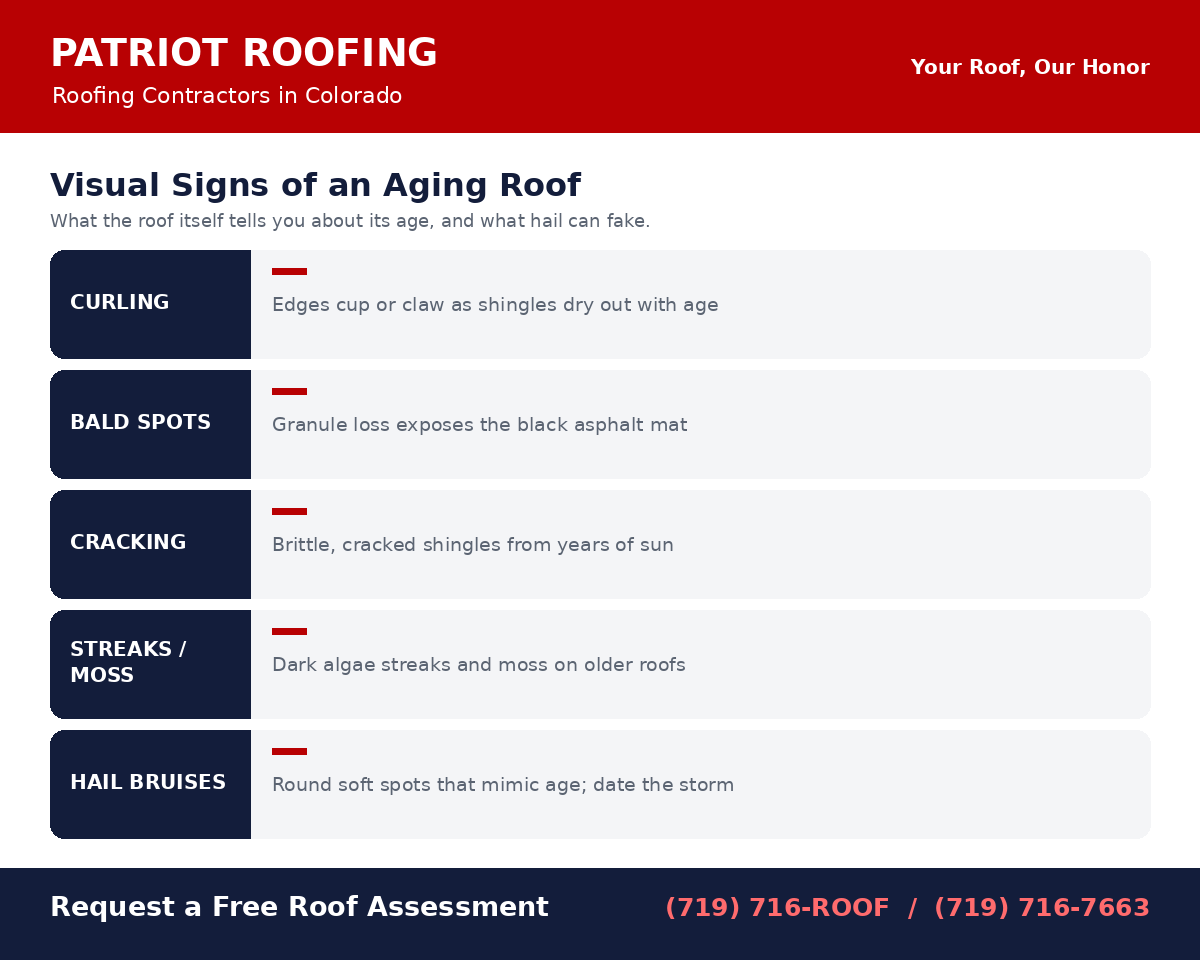
Curling or clawing shingles happen as the material dries out and loses flexibility over the years. Bald spots, where granules have worn away and the black asphalt mat shows through, point to an older or sun-beaten roof. Widespread cracking is another sign of shingles that have baked in the sun for a long time. Dark algae streaks and moss build up over years, especially on shaded slopes. And worn, rusted, or lifting flashing around chimneys and vents is a classic sign of a roof that has been up there a while. Our guide on how do I know if my roof is damaged goes deeper on what each sign means.
The Colorado catch: hail can mimic age
Here is where Colorado is different. Hail damage can look a lot like age. Hail knocks granules loose, leaving bald spots and dark bruises that resemble normal wear, so a three-year-old roof that took a bad hailstorm can look older than it is. The reverse is true too: a roof can be near the end of its life and still look decent until it starts to leak.
That is why granule loss alone does not date a roof. You have to separate age-related wear from storm damage, and that often means checking whether hits are random and round, like hail, or uniform, like wear, and tying them to a known storm date. Because Colorado sits in Hail Alley, per NOAA’s National Severe Storms Laboratory, this mix-up is common here. Our hail damage identification guide shows how to tell the difference, which matters because storm damage may be a covered insurance claim while age is not.
Roof lifespan by material
Knowing what a roof is made of tells you how long it should last, which helps you turn a rough age into a rough remaining life. These are typical service lives under normal conditions.
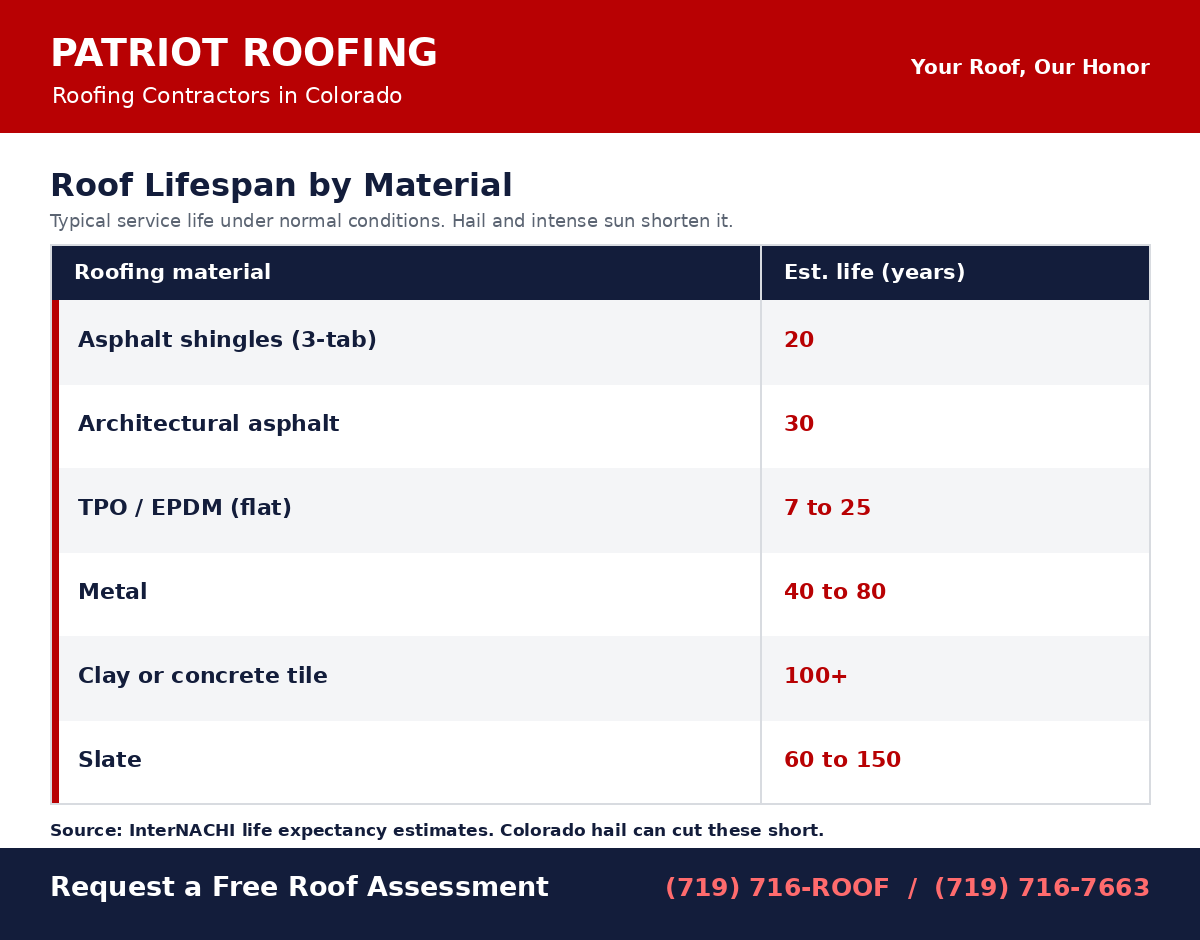
According to InterNACHI’s life expectancy estimates, three-tab asphalt shingles last around 20 years, architectural asphalt around 30, flat TPO and EPDM systems roughly 7 to 25, metal 40 to 80, tile 100 or more, and slate 60 to 150. The important caveat for our state: those are normal-condition numbers. Colorado’s intense sun and frequent hail routinely cut asphalt roofs short of the book number, so a Front Range roof often ages faster than the chart suggests. If you are weighing a longer-lasting replacement, our metal roof in Colorado guide compares the options.
Check the permit and paper records
The most accurate way to date a roof is often the paper trail. A permitted roof replacement leaves a public record with a date, so a quick permit lookup can turn a guess into a fact.
In El Paso County and Colorado Springs, search by address through the Pikes Peak Regional Building Department permit search. In the City of Pueblo, permit history runs through the Pueblo Regional Building Department, reachable via the City of Pueblo building permits office. Beyond permits, other records help: ask the seller or current owner directly, check any manufacturer warranty paperwork, look for a dated receipt or invoice from a prior roofer, and review the county assessor’s building records. If you are buying the home, our guides on a pre-purchase roof inspection in Pueblo and in Colorado Springs tie all of this together.
When to stop guessing and get an inspection
Reading signs and pulling records gets you close, but a professional inspection gives you the real answer: not just how old the roof is, but how much usable life is left, whether any damage is age or storm related, and what a repair or replacement would cost. That last part matters, because a roof at 15 years with hail damage and a roof at 15 years in good shape are very different decisions. If the wear turns out to be storm damage, it may be worth an insurance claim, and our insurance claim assistance and the Colorado Division of Insurance hail FAQs explain how that works.
Get a Definitive Answer on Your Roof
Not sure how old your roof is, or how much life it has left? We will get on it, date it as closely as the roof and the records allow, separate normal age from hail damage, and give you an honest written read with real numbers. No pressure, no obligation.
Request a Free Roof Assessment today by calling Patriot Roofing at (719) 716-ROOF, or reach us through our contact page. We provide residential roofing, roof inspections, and storm damage work across the Colorado Front Range. Your Roof, Our Honor.
Frequently asked questions
How can I tell how old my roof is?
Combine three things: visual wear like curling, bald spots, and cracking, the roof’s permit history from your local building department, and records such as the seller’s word, warranty paperwork, or a prior roofing invoice. A professional inspection ties them together for the most accurate estimate.
What are the signs of an old roof?
Curling or clawing shingles, granule loss and bald spots showing the asphalt mat, widespread cracking, dark algae streaks or moss, and worn or lifting flashing. Several signs together are more telling than any one alone.
How long does a roof last in Colorado?
It depends on the material and the weather. Three-tab asphalt averages about 20 years and architectural about 30 under normal conditions, but Colorado’s sun and hail often shorten that. Metal, tile, and slate last much longer.
Can hail damage make a roof look older than it is?
Yes. Hail knocks off granules and leaves bald spots and bruises that resemble age-related wear, so a young roof can look old after a bad storm. Telling storm damage from age matters, because storm damage may be an insurance claim while age is not.
How do I find out when a roof was replaced?
Search the property’s permit history through your local building department, such as the Pikes Peak Regional Building Department for Colorado Springs or the Pueblo Regional Building Department for Pueblo. A permitted replacement carries a date. Warranty paperwork and prior invoices help too.
Does granule loss always mean my roof is old?
No. Granule loss can come from normal aging or from hail. That is why granule loss alone does not date a roof. An inspector looks at the pattern and ties it to a storm date to tell the difference.
How much life does my roof have left?
That depends on its age, material, installation quality, ventilation, and storm history. Knowing the material gives a baseline lifespan, and an inspection estimates the remaining years and whether repair or replacement makes more sense.
Can I tell a roof’s age from the ground?
You can spot some signs, like heavy curling, streaking, or missing shingles, from the ground with binoculars. But an accurate age and condition read requires getting on the roof and checking flashing, decking, and granule wear up close.
Does a new layer of shingles over an old roof affect its age?
Yes, and it complicates things. A roof-over hides the older layers and their condition, and many jurisdictions now require full tear-off. If a roof has multiple layers, its true condition and remaining life are harder to judge without an inspection.
Should I replace a roof based on age alone?
Not automatically. Age is a strong signal, but condition matters more. A well-kept roof may have life left past its average, while a storm-damaged one may need work early. An inspection tells you whether to repair, wait, or replace.
Request a Free Roof Assessment
Stop guessing about your roof’s age and remaining life. Get an honest, written read with real numbers. Request a Free Roof Assessment today by calling Patriot Roofing at (719) 716-ROOF, or reach us through our contact page. Your Roof, Our Honor.