



How to File a Hail Damage Insurance Claim in Colorado: A Step-by-Step Guide From a Pueblo Roofer
Filing a roof insurance claim after a hail storm is not technically hard. Most Colorado homeowners can navigate it. But the order you do things in matters more than the things themselves. Get the order wrong and the adjuster writes a scope of work that becomes the ceiling on your settlement, and raising that ceiling later is harder than getting it right the first time. Get the order right and the process runs smoothly with minimal back-and-forth.
We are a local Pueblo roofing contractor that specializes in insurance restoration. We walk Colorado homeowners through this process every week. This guide shares the exact step-by-step we use, the Colorado-specific legal protections most homeowners do not know exist, what to do if your claim gets denied, and the mistakes that cost homeowners money.
This is written for residential homeowners in Pueblo, Pueblo West, Cañon City, Florence, Colorado Springs, and the broader Southern Colorado region. The principles apply statewide, but the local market context is what we know best.
Before you file: should you file a claim at all?
Not every storm requires an insurance claim. Filing reflexively can hurt you. Here is the honest decision framework we walk homeowners through.
File the claim if:
- A qualified contractor documented damage that exceeds your deductible
- The storm date is recent (within 30 to 60 days ideally)
- You do not have multiple recent claims already on your record
Consider waiting if:
- The damage estimate is close to your deductible (filing nets you little)
- Your roof is old and your carrier has moved you to actual cash value coverage
- You have already filed a claim within the last 2 to 3 years
Do not file if:
- You cannot document damage tied to a specific storm
- A contractor refuses to put findings in writing
- The damage is below your deductible
This matters because Colorado carriers track claim history carefully. Multiple claims in a short period can trigger non-renewal at the next term. The Colorado insurance market is tight right now. Finding new homeowner coverage after a non-renewal is harder than most homeowners expect. A claim is a real decision, not a default action.
If you have decided to file, here is how to do it right.
Step 1: Get a professional inspection before you call your insurance
This is the single most common and most expensive mistake Colorado homeowners make. They notice damage, panic a little, and call the insurance company first. The carrier sends an adjuster. The adjuster writes the initial scope. From that point forward, every conversation is shaped by what the adjuster documented on day one.
The better play is to have an independent contractor inspection on file before the carrier knows the claim exists.
What this looks like in practice:
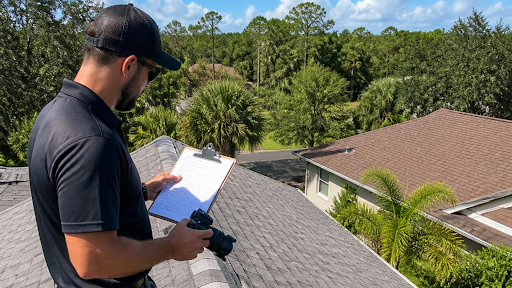
- Schedule a free roof inspection with a reputable local Colorado contractor
- The contractor walks the entire roof, marks hits with chalk, photographs damage on every slope, documents collateral damage on gutters and downspouts and HVAC units, and produces a written report
- You receive that report in hand before any insurance conversation happens
If the damage clearly justifies filing, you call the carrier already armed with documentation. If the damage is marginal, you can decide not to file at all and save yourself the claim history hit.
A useful inspection report should include slope-by-slope hit counts, photos with date stamps, a slope diagram showing which faces were affected, and a written summary connecting the damage to a specific storm event. If your contractor cannot produce this, find a different contractor.
One critical warning. Storm chaser crews from out of state flood Colorado neighborhoods within hours of every significant hail event. They have branded shirts, ladders on the truck, and high-pressure sales tactics. Some are legitimate. Many are not. A contractor with a permanent local address, real local reviews, and active Colorado business standing is your protection. We cover what to look for in detail in our guide on how to identify hail damage on your roof.
Step 2: Pull your policy and read three key sections before you call
Before you pick up the phone, find three pieces of information in your policy.
Your declarations page. Often called the “dec page,” this is the summary first page of your policy. Pull it from your insurer’s online portal or your physical paperwork. It lists your policy number, named insured, coverage limits, and deductible.
Your deductible structure. Most Colorado homeowner policies have either a flat deductible (for example, $2,500) or a percentage-based wind and hail deductible (for example, 1 percent of dwelling coverage). On a home insured for $400,000, a 1 percent wind/hail deductible is $4,000. Knowing your deductible matters because it determines whether filing makes financial sense. If your damage estimate is $5,000 and your deductible is $4,000, the carrier’s check is only $1,000. That is rarely worth a claim history mark.
Your coverage type: ACV vs RCV.
Coverage Type | What It Pays | Best For |
Replacement Cost Value (RCV) | Full cost to replace your roof with similar materials, minus your deductible | Newer roofs, most homeowners |
Actual Cash Value (ACV) | Depreciated value of your existing roof based on age and condition | Carrier’s preferred terms for older roofs |
If you have RCV coverage, the carrier typically pays in two installments. An initial check for the actual cash value of the loss arrives first. After the work is completed and documented, the carrier releases the depreciation portion (the “recoverable depreciation” check).
If you have ACV coverage, you only get one check, and it is based on the depreciated value. ACV checks often do not cover the full cost of a new roof, which means you pay the difference out of pocket.
Also look for:
- Ordinance or law coverage. Pays for code-required upgrades that current building code requires but your old roof did not have (synthetic underlayment, ice and water shield in valleys, etc.).
- Matching coverage. Requires the carrier to pay for uniform appearance, meaning if one slope is damaged, they may need to replace adjacent slopes that won’t match.
- Cosmetic damage waivers. Excludes cosmetic-only damage. Most common on metal roof policies. We cover this in our metal roof guide.
Step 3: Make the claim call (what to say and what not to say)
The first call to your insurance company is a data exchange, not a damage assessment. The carrier’s representative is collecting information to open a claim file and assign an adjuster. Their job is not to evaluate your damage on the call. Volunteering more information than they need creates a record the carrier can use later to define the claim before any inspection has happened.
Have ready before you call:
- Your policy number from the dec page
- Date of loss (the storm date, not the date you discovered damage)
- A brief 2 to 3 word damage description (“hail damage to roof”)
- Your contact information
Do not, on this call:
- Volunteer dollar estimates of damage
- Speculate about cause
- Say “I’m not sure if there’s damage” (that goes in your claim notes)
- Discuss the contractor inspection findings in detail unless asked specifically
What you should walk away with:
- A claim number
- The name and contact information of your assigned adjuster
- An estimated timeframe for the adjuster inspection (typically 7 to 14 days)
Colorado’s unfair-claims rules require your carrier to acknowledge your claim promptly — often cited as around 15 working days. Note the date you filed. If you don’t hear from an adjuster within a couple of weeks, contact the carrier directly and escalate. If the carrier remains unresponsive, the Colorado Division of Insurance takes consumer complaints.
Step 4: Prepare for the adjuster meeting
The adjuster meeting is the most important moment in the entire claims process. The scope of work the adjuster writes becomes the foundation of your settlement. Preparation matters.
Have your contractor present. This is standard practice in Colorado insurance restoration. A reputable contractor does not just attend the meeting. They prepare for it.
A typical prep flow looks like this:
- Contractor walks the roof the morning of the meeting
- Brings fresh chalk for test square marking
- Brings measuring tools, a camera, and a printed copy of the original inspection report
- Has a pre-conversation with the homeowner about what to expect
What happens during the meeting:
- Adjuster does their own 10 by 10 foot test square count, marking hail impacts with chalk
- Your contractor walks the roof with them, pointing out damage the adjuster might miss
- Both sides discuss collateral damage to gutters, downspouts, vent covers, AC fins, screens, painted surfaces
- The adjuster makes notes; the contractor makes parallel notes
- Adjusters usually write the formal scope at their office afterward, not on site
Your role as the homeowner:
- Be present and engaged, but stay off the roof yourself
- Listen, take notes, ask clarifying questions
- Do not argue. If your contractor and the adjuster disagree about something, let them discuss it professionally. Disagreements get resolved through documentation and formal supplements, not by raising voices on the roof.
- Send a follow-up email within 24 hours summarizing what was discussed and what damage was noted. This creates a written record.
A Colorado-specific protection worth knowing: you have the right to choose your own contractor. Your insurance company cannot require you to use a “preferred vendor” or in-network contractor from their list. That right — along with the contract and deductible protections in Colorado Senate Bill 38 (codified as CRS 6-22-101 through 6-22-105) — is one of your most important protections in Colorado. We cover both in detail below.
Step 5: Review the scope and identify what is missing
Within 1 to 2 weeks of the adjuster visit, you will receive a written scope of loss. This document lists every item the carrier is paying for and at what price. It is sometimes called the “scope,” “estimate,” or “settlement.”
Review it line by line with your contractor. A first scope rarely captures everything. Common items missed:
- Damaged ridge cap or hip cap shingles
- Damaged underlayment in valleys
- Drip edge replacement
- Pipe boots, vent flashing, and step flashing
- Ice and water shield required by current building code
- Synthetic underlayment required by current building code
- Code-required upgrades that the existing roof did not have
- Painted exterior items: gutters, downspouts, fascia, mailbox, fencing
- Window screens
- Skylight damage
- Detached structures: sheds, fences, deck rails
If items are missing, your contractor prepares a supplement. A supplement is a formal documented request to add items to the approved scope, with photos, measurements, and pricing justification.
Supplements are normal. First scopes are routinely incomplete. Insurance carriers expect supplements and have a defined process for handling them. The work is in the documentation. A reputable contractor does this work for you.
One thing you handle personally: the deductible. Under Colorado SB 38, it is illegal for a roofing contractor to waive, pay, rebate, or otherwise absorb your insurance deductible. Any contractor offering to “eat your deductible,” “give you a credit for your deductible,” or “make the deductible disappear” is breaking Colorado law. They are also putting your claim at risk. If a carrier discovers your contractor waived the deductible, the carrier can deny the claim or pursue fraud charges. The deductible is your obligation. Pay it directly to the contractor.
Step 6: If you have a mortgage, your check is co-payable
If your home has a mortgage, your insurance check is typically issued as a two-party check, naming both you and your mortgage servicer (lienholder).
This catches many homeowners off guard. They expect a check in their name only and instead get a check they cannot cash without the bank’s involvement.
Why this happens: the mortgage company has a financial interest in the home being properly repaired. The bank wants confirmation that the repair work actually happens before releasing the funds.
What to expect:
- Insurance check arrives co-payable to you and your lender
- You cannot cash it without your lender’s endorsement
- Your lender requires documentation: a signed contractor’s contract, lender’s release form, and sometimes a property inspection
- For smaller claims (typically under $10,000 to $20,000), some lenders endorse the check immediately and release all funds at once
- For larger claims, lenders typically release funds in stages tied to verified work completion (first half on signed contract, second half after final inspection)
Plan for an extra 1 to 3 weeks in the timeline if a mortgage company is involved. It is standard and not a reason to panic.
Step 7: Roof replacement and final payment
Once the deductible is paid and the contract is signed, the actual work begins.
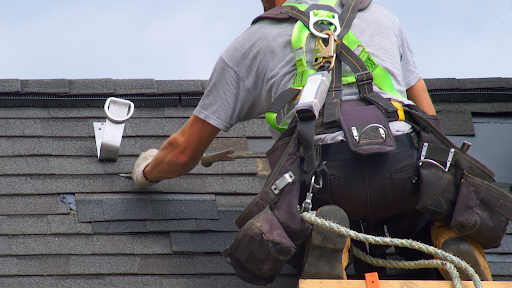
During installation:
- Materials delivered (usually the day before work starts)
- Tear-off of old roofing
- Inspection of the decking underneath
- New underlayment, drip edge, and flashing
- New shingles installed
- Cleanup with magnetic rollers to catch loose nails
- City building inspector visits within 1 to 2 weeks for final permit inspection
Typical install time for a Colorado residential roof: 1 to 2 days for a standard job.
After completion:
- Final invoice from contractor with all material certifications and warranty documentation
- You or your contractor submits to insurance for depreciation release (if you have RCV coverage)
- Depreciation check arrives within 2 to 4 weeks
- You forward the depreciation check to the contractor as final payment
Total timeline from initial inspection to final payment: typically 4 to 8 weeks for a straightforward claim. Longer if supplements are required, if the mortgage company adds steps, or if a denial appeal becomes necessary.
We handle every step of this for our insurance restoration clients. You can read more about our process on our storm damage roof repair page.
What to do if your insurance claim is denied
A denial is not the end of the road. Colorado homeowners successfully overturn denied claims regularly, and several specific tools exist for the process.
Common reasons claims get denied:
- Adjuster’s hit count was below the carrier’s threshold (typically 8 to 10 functional hail impacts per 100 square foot test square)
- Damage attributed to “pre-existing condition” or “normal wear and tear”
- Damage attributed to a non-covered cause (improper installation, lack of maintenance)
- Insufficient documentation in the initial filing
- Claim filed outside the policy’s filing window
Your options after a denial:
Request a re-inspection. You have the right to request another adjuster visit. This is especially effective if your contractor documented damage that the original adjuster did not include in their findings. Submit your contractor’s report, photos, and a written request for a second look.
Submit a formal supplement with new documentation. If your contractor identifies damage that was missed, document it thoroughly and submit a written supplement request. Photos, measurements, and pricing justification all matter.
Request a different adjuster. If you have reason to believe the original adjuster missed obvious damage or was unreasonable, you can request reassignment. Carriers do not love this request but they honor it when it is justified.
Invoke the appraisal clause. Most Colorado homeowner policies include an appraisal clause. This is a formal dispute resolution process: you pick an appraiser, the insurance company picks an appraiser, the two of them pick an umpire, and the three of them determine the value of loss. Appraisal is binding. It is the homeowner’s strongest formal tool when carrier and contractor disagree fundamentally on scope.
Hire a public adjuster. Public adjusters work for the homeowner (not the insurance company) and negotiate claims on your behalf for a percentage of the settlement. They are typically worth considering on claims over $20,000 where the gap between the carrier’s offer and the actual cost of repair is significant. Colorado licenses public adjusters; verify any public adjuster through the Colorado Division of Insurance before signing.
File a complaint with the Colorado Division of Insurance. If you believe your carrier is acting in bad faith, the Colorado DOI takes consumer complaints and investigates. This often produces faster resolution than back-and-forth letters with the carrier.
A denial is a starting point for the next conversation, not a final answer.
Colorado-specific protections every homeowner should know
Colorado has some of the strongest residential roofing consumer protections in the country. Most homeowners do not know they exist. Knowing your rights is the difference between being a passive participant in the claim and being a properly informed homeowner.
Colorado Senate Bill 38 (CRS 6-22-101 through 6-22-105). This is the residential roofing consumer protection law, passed in 2012 and still in force. It requires:
- Written contracts for all residential roofing work tied to insurance claims
- A 72-hour right of cancellation after the contract is signed
- Clear disclosure of the contractor’s full legal name, physical address, and license information
- Prohibition on contractors waiving, paying, or rebating the homeowner’s insurance deductible
- Specific timing and performance requirements for the work
A reputable Colorado roofing contractor knows SB 38 backwards and follows it without being asked.
Right to choose your own contractor. Your insurance company cannot require you to use a preferred vendor. Some carriers maintain lists of “approved” or “in-network” contractors and will gently push homeowners toward them, but you have a legal right to choose any licensed contractor in Colorado.
Prompt acknowledgment of your claim. Colorado’s unfair-claims rules require your carrier to acknowledge your claim promptly — commonly cited as around 15 working days. If they go silent, escalate, and note the date you filed.
Assignment of Benefits (AOB) regulations. Colorado restricts how contractors can take assignment of insurance benefits. Be very cautious if a contractor asks you to sign over your insurance claim rights to them via an AOB. A reputable Colorado contractor does not need an AOB to do the work.
Strengthen Colorado Homes Enterprise (SB26-155). Signed into law in 2026, this program creates a grant fund within the Colorado Division of Insurance specifically to help homeowners install impact-resistant roofing. It is still being set up — the state is assembling the board that will run it, so grants are not open yet. If you are replacing your roof under a claim and considering upgrading to Class 4 impact-resistant shingles or a metal roof, this program may offer additional financial assistance once it launches. Updates are posted on the Colorado DOI website.
According to a February 2026 release from the Colorado Division of Insurance, hail damage now accounts for between 26 and 54 percent of a Colorado homeowner’s insurance premium depending on the county, and roughly 50 percent along the Front Range. Hail mitigation has become a state-level policy priority for exactly this reason.
The Insurance Institute for Business and Home Safety maintains the technical standards behind impact-resistant ratings if you want to understand what makes a roof more hail-resilient before choosing your replacement materials.
Why this is different in Southern Colorado
Pueblo, Pueblo West, Cañon City, Florence, and the broader Southern Colorado region have some specific dynamics worth knowing about.
Storm patterns favor Pueblo. Front Range storms often move from northwest to southeast. Pueblo and the surrounding communities regularly catch storms that started in Colorado Springs or the foothills earlier in the day. This whole corridor sits inside what the insurance industry calls “Hail Alley.” According to the Rocky Mountain Insurance Information Association, Colorado ranks among the top two states in the country for hail insurance claims, alongside Texas, with more than $5 billion in insured hail damage over the past decade.
Carrier presence is different from north metro Denver. The carrier landscape in Southern Colorado includes more regional carriers and a larger footprint for the Colorado FAIR Plan (the carrier of last resort) than you see in Denver. This affects how claims are handled and how quickly.
Storm chaser pressure is high. Pueblo sits on the I-25 corridor. Out-of-state storm chaser crews pass through frequently after Front Range storms, sometimes within hours. Local contractors with permanent Pueblo addresses, established Colorado business registrations, and verified local reviews are your protection.
Average claim sizes tend to be lower. Pueblo home values are generally lower than north metro Denver, which means typical claim amounts are smaller. The practical implication: supplements and denial appeals require sharper documentation in Pueblo because the dollar gaps are smaller and easier for carriers to dispute.
Working with a contractor who genuinely operates in your specific Southern Colorado community matters more than working with a Denver or Colorado Springs firm that nominally “covers” the region.
Frequently asked questions
How long do I have to file a hail damage insurance claim in Colorado?
Report the claim promptly — your policy requires prompt notice, and Colorado law gives you up to three years from the date of loss to bring a legal action on a homeowner’s policy (carriers cannot shorten that below three years). But “you can still sue” is not the same as “the claim will go smoothly.” As a practical matter, get an inspection within 30 days and file within 30 to 60 days of the storm. The longer you wait, the harder it is to tie the damage to a specific storm. Check your policy for its specific notice requirements.
Does filing a roof insurance claim raise my premium?
A single weather-related claim usually does not raise your premium directly because hail and wind damage are considered “Acts of God” rather than driver behavior or property maintenance failures. The bigger risk is non-renewal at the next term, especially if you have multiple claims on record. Colorado carriers have been non-renewing aggressively in hail-prone areas.
What is the difference between ACV and RCV?
ACV (Actual Cash Value) pays the depreciated value of your existing roof based on its age and condition. RCV (Replacement Cost Value) pays the full cost to replace your roof with similar materials, minus your deductible. RCV is better coverage. Roofs older than 10 to 15 years are often shifted to ACV by Colorado carriers due to the hail market.
What does a roof insurance claim cover?
A roof insurance claim typically covers sudden, accidental damage from hail, wind, fallen trees, or other covered storm events. It does not cover normal wear and tear, age-related deterioration, manufacturing defects, or maintenance failures. Specific items covered usually include shingles, underlayment, flashing, ridge caps, gutters, downspouts, vent covers, and sometimes adjacent painted surfaces and detached structures.
Can my insurance company drop me after a roof claim?
Yes, Colorado carriers have been non-renewing homeowner policies in hail-prone areas at rates that have drawn Colorado Division of Insurance attention. A single claim usually does not trigger non-renewal, but multiple claims in a short period (typically 2 to 3 within a few years) substantially raises the risk. This is one reason filing reflexively for small claims is a bad strategy.
What is the deductible on a roof insurance claim?
The deductible is the portion of the loss you pay out of pocket before the carrier pays anything. Most Colorado homeowner policies have either a flat deductible (commonly $1,000 to $5,000) or a percentage-based wind and hail deductible (commonly 1 to 2 percent of dwelling coverage). On a home insured for $400,000, a 1 percent wind/hail deductible is $4,000.
Can a roofing contractor pay my deductible in Colorado?
No. Under Colorado Senate Bill 38 (CRS 6-22-101 through 6-22-105), it is illegal for a roofing contractor to waive, pay, rebate, or absorb a homeowner’s insurance deductible. Any contractor offering to do so is breaking Colorado law and putting your claim at risk. The deductible is your obligation.
What if my adjuster missed damage on my roof?
Have your contractor document the missed damage with photos, measurements, and pricing. Submit a written supplement request to the carrier. Most carriers honor reasonable supplements when the documentation is thorough. If the supplement is denied, you can request a re-inspection, request a different adjuster, or invoke the appraisal clause in your policy.
How long does the entire claim process take?
A straightforward Colorado hail damage claim typically runs 4 to 8 weeks from initial inspection to final payment. Claims involving supplements, mortgage company disbursement requirements, or denial appeals can extend to 12 weeks or longer. The actual roof installation itself usually takes only 1 to 2 days.
Can I choose my own roofing contractor after filing a claim?
Yes. Colorado law guarantees your right to choose any licensed contractor in the state. Insurance companies cannot require you to use a “preferred” or “in-network” contractor. If a carrier representative pressures you toward a specific contractor, that is your cue to push back.
What is a supplement and when is it needed?
A supplement is a formal request to add items to your approved insurance scope after the initial adjustment. Supplements are needed when the original adjuster missed damage, when current building codes require upgrades not included in the original scope, or when additional damage is discovered during tear-off. Supplements are normal and expected in most Colorado claims.
What if my insurance denies my claim?
You have several options: request a re-inspection with new documentation, submit a formal supplement, request a different adjuster, invoke the appraisal clause in your policy (binding third-party resolution), hire a public adjuster to negotiate on your behalf, or file a complaint with the Colorado Division of Insurance if you believe the carrier is acting in bad faith.
Should I hire a public adjuster?
A public adjuster is worth considering for claims over $20,000 where the gap between the carrier’s offer and the actual cost of repair is significant. Public adjusters work for the homeowner for a percentage of the settlement. Verify any public adjuster through the Colorado Division of Insurance before signing.
The bottom line
A Colorado hail damage insurance claim runs smoothly when you do four things right.
First, get a professional inspection before you call your insurance company. This puts independent documentation in your hands before the carrier’s adjuster shapes the conversation.
Second, know your policy. Your deductible, your coverage type (ACV vs RCV), and the specific endorsements on your policy determine what is possible from the claim. Read the dec page before you call.
Third, have your contractor present at the adjuster meeting. The scope written that day becomes the foundation of your settlement. Two sets of professional eyes catch more than one.
Fourth, know your Colorado-specific protections. SB 38 gives you the deductible-payment prohibition and the 72-hour cancellation right, and you have a separate right to choose your own contractor. The Colorado Division of Insurance has consumer complaint resources. The appraisal clause in your policy is your strongest tool if a denial happens.
Owner-operator Tony Carleo and our crew handle this process for Colorado homeowners every week — Pueblo, Pueblo West, Cañon City, Florence, Colorado Springs, and the surrounding Front Range communities. We attend adjuster meetings, prepare supplements, walk denials through appeal, and stand between you and the storm chaser industry. That is what help with your insurance claim actually looks like.
If you need help with a claim, call us at (719) 716-ROOF / (719) 716-7663 or request a free inspection. No cost, no pressure. We will walk your roof, give you a written assessment, and help you understand what you have before you make any insurance decisions. Your Roof, Our Honor means we sit at the adjuster meeting with you and stand between you and the storm-chaser industry — not just file paperwork and hope.
You can read more about how we approach residential roofing and storm damage restoration for Colorado homeowners. And if you are not sure yet whether your roof has damage at all, our hail damage identification guide walks through exactly what to look for.
Patriot Roofing is a locally owned roofing contractor based at 503 N Main St #611, Pueblo, CO 81003. We specialize in insurance claim restoration, hail and storm damage repair, and residential roof replacement across Pueblo, Pueblo West, Colorado Springs, Cañon City, Florence, and the broader Southern Colorado region.