



Attic Ventilation for Asphalt Shingle Roofs in Colorado
Attic ventilation is the part of a roof system nobody thinks about until it causes a problem. It does not leak, it is not visible from the curb, and it rarely makes the sales pitch. But in Colorado’s climate, poor attic ventilation quietly shortens the life of an asphalt shingle roof, drives up energy bills, and sets up ice dams in winter. Getting it right is one of the cheapest ways to protect an expensive roof.
We are Patriot Roofing, a locally owned company in Pueblo, and we check attic ventilation on every roof we install across Southern Colorado and the Front Range. Here is how it works, why it matters more here than in milder places, and how to choose between the common vent types. This is general information, and a roofer can assess your specific attic on an inspection.
Why ventilation matters more in Colorado
Colorado’s high-altitude climate is hard on roofs in ways that make ventilation more important, not less.
The sun is the first reason. At elevation, UV is more intense, and a poorly vented attic traps that heat. In summer, attic temperatures can soar, which bakes the shingles from underneath and ages them faster than the weather alone would. The U.S. EPA notes how much roof and attic heat drives cooling costs, and good ventilation helps move that heat out.
The second reason is our temperature swings. Colorado days and nights can differ by 30 or 40 degrees, and that constant expansion and contraction stresses roofing materials. In winter, the bigger issue is ice dams. When a warm, poorly vented attic melts snow on the roof, the water runs down and refreezes at the cold eaves, forming an ice dam that forces water back under the shingles. The ENERGY STAR guidance on attic ventilation explains how keeping the attic cold reduces that risk. And because Colorado sits in Hail Alley, per NOAA’s National Severe Storms Laboratory, you want your shingles in their best shape to take a hit, not prematurely aged by trapped heat.
How balanced ventilation works
Attic ventilation is not about adding as many vents as possible. It is about balance. Air has to come in low and go out high.
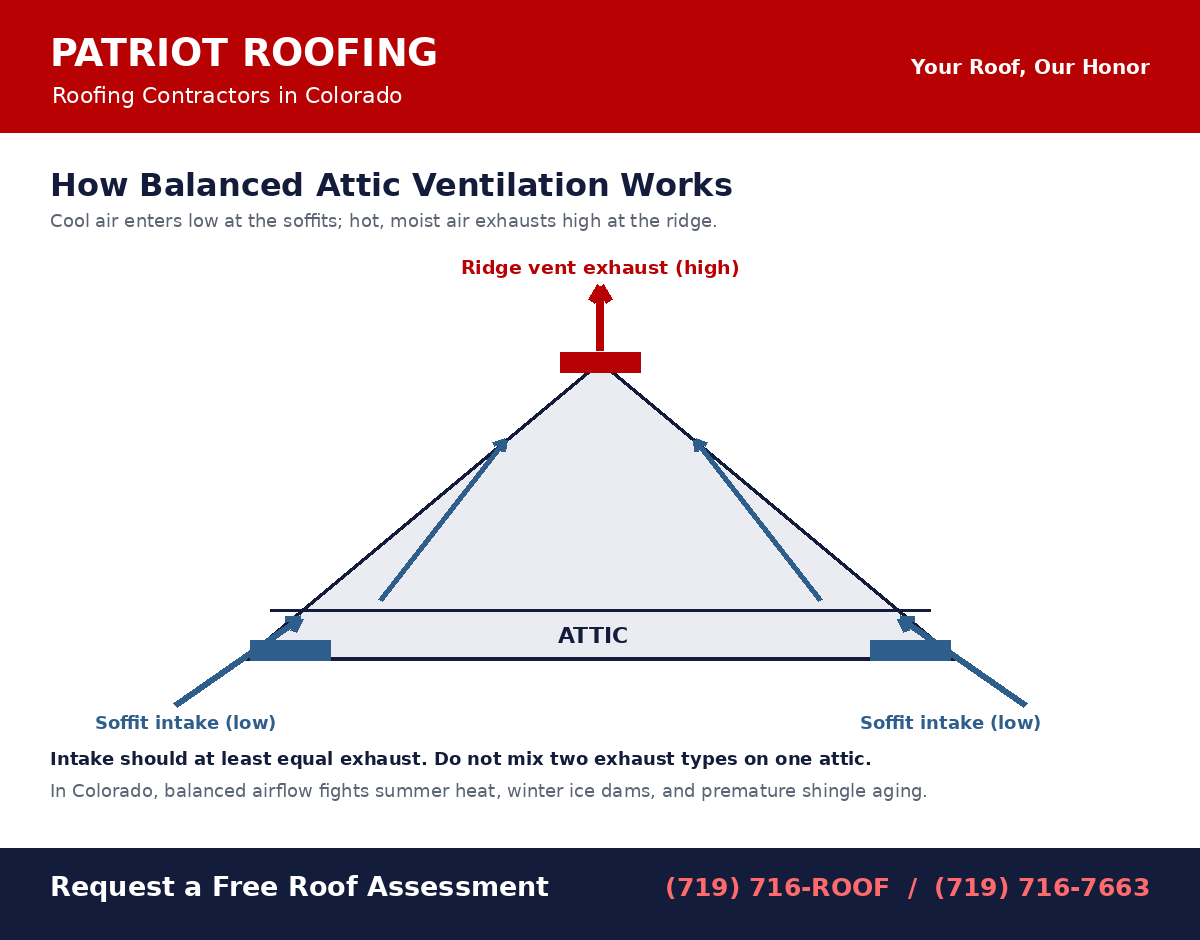
Cool outside air enters through intake vents down low, usually at the soffits under the eaves. As that air warms inside the attic, it rises and exhausts through vents up high, at or near the ridge. This natural flow, driven by heat rising, continuously moves hot and moist air out. The Asphalt Roofing Manufacturers Association is clear on two points: you need both adequate intake and adequate exhaust, since one without the other barely works, and the intake should at least equal the exhaust. A system with exhaust but blocked or missing soffit intake simply cannot breathe.
One important warning: do not mix two different types of exhaust on the same attic, such as a ridge vent plus powered fans or box vents. Combining exhaust types can short-circuit the airflow, pulling air from the nearest vent instead of from the soffits, which defeats the purpose.
Ridge vent vs box vent
For asphalt shingle roofs, the two most common exhaust options are ridge vents and box vents. Both work when sized and installed correctly, but they suit different roofs.
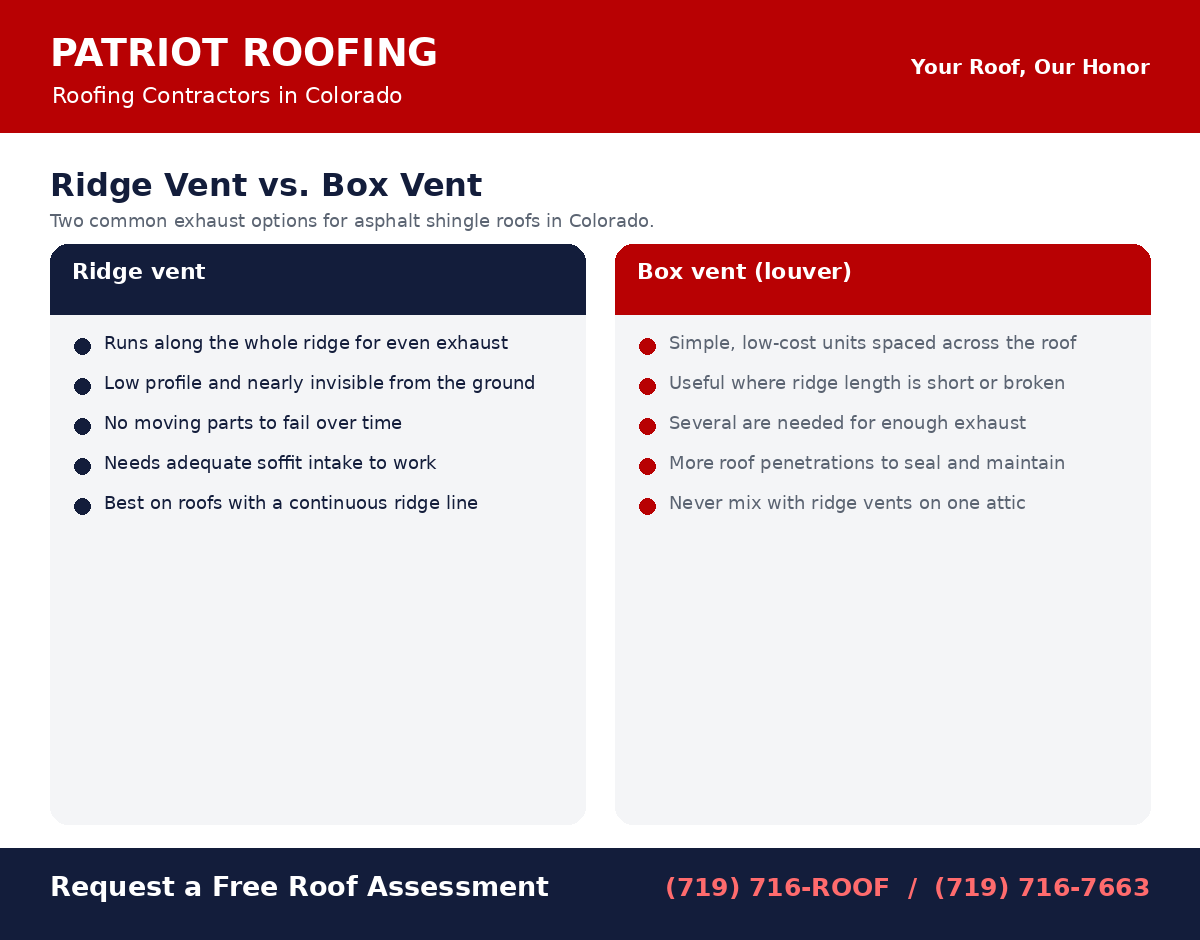
A ridge vent runs along the entire peak of the roof, providing even exhaust across the whole ridge line. It sits low and is nearly invisible from the ground, and it has no moving parts to fail. Its one requirement is adequate soffit intake to feed it, and it works best on roofs with a long, continuous ridge. Box vents, also called louver vents, are simpler individual units spaced across the upper roof. They are useful on roofs where the ridge is short or broken into sections, but you need several of them to move enough air, each one is another penetration to seal, and they should never be combined with a ridge vent on the same attic space.
For most Colorado homes with a continuous ridge, a ridge vent paired with clear soffit intake is the cleaner, more effective choice. But the right answer depends on your roof’s shape, so it is worth having a roofer look at it.
Signs your attic ventilation is off
You can often spot a ventilation problem from the symptoms. Watch for ice dams forming at the eaves in winter, a roof that feels like an oven in summer, unusually high cooling bills, moisture, frost, or mold in the attic, and shingles that are aging or curling faster than they should. Any of these is worth an inspection. The InterNACHI life expectancy estimates note that heat and poor conditions shorten shingle life well below the normal range, and ventilation is a big part of that.
Get it right at replacement time
The best time to fix attic ventilation is when the roof is being replaced, because the roofer can design a properly balanced system and add a ridge vent as part of the job. If you are planning a new roof, make ventilation part of the conversation, not an afterthought. It protects your investment and can lower your energy bills for the life of the roof. Our guides on how to tell the age of a roof and the best time to replace a roof in Pueblo and Colorado Springs can help you plan.
Make Sure Your Roof Can Breathe
Not sure whether your attic is breathing the way it should? We will check your intake and exhaust balance as part of a free assessment, flag any ventilation problems, and tell you honestly whether it needs attention now or at your next replacement. No pressure, no obligation.
Request a Free Roof Assessment today by calling Patriot Roofing at (719) 716-ROOF, or reach us through our contact page. We install and inspect asphalt shingle and metal roofs with proper ventilation across the Colorado Front Range, and offer residential roofing and storm damage services. Your Roof, Our Honor.
Frequently Asked Questions
Why is attic ventilation important for an asphalt shingle roof?
Good ventilation moves hot, moist air out of the attic, which keeps shingles from baking and aging early, reduces cooling bills, prevents attic moisture and mold, and helps stop winter ice dams. Poor ventilation quietly shortens the life of the roof.
Why does attic ventilation matter more in Colorado?
Colorado’s intense high-altitude sun, big day-to-night temperature swings, and snowy winters all stress a roof. Trapped attic heat ages shingles faster, and a warm attic melts roof snow that refreezes into ice dams. Balanced ventilation addresses all three.
What is balanced attic ventilation?
It means having enough intake, usually at the soffits, and enough exhaust, at or near the ridge, so air flows in low and out high. The intake should at least equal the exhaust. Exhaust without adequate intake, or the reverse, barely works.
Is a ridge vent better than a box vent?
For most homes with a long, continuous ridge, a ridge vent gives even exhaust, sits low, and has no moving parts, which makes it the cleaner choice. Box vents suit roofs with short or broken ridges. The best option depends on your roof’s shape.
Can I use a ridge vent and box vents together?
No. Combining two different exhaust types on the same attic can short-circuit the airflow, drawing air from the nearest vent instead of from the soffits. Use one exhaust type, matched to adequate soffit intake.
How do I know if my attic ventilation is poor?
Common signs include ice dams at the eaves in winter, an extremely hot attic in summer, high cooling bills, moisture, frost, or mold in the attic, and shingles that curl or age faster than expected. Any of these warrants an inspection.
Does attic ventilation affect my energy bills?
Yes. A well-vented attic releases built-up summer heat, which eases the load on your air conditioning, and paired with good insulation and air sealing it helps keep indoor temperatures stable year-round, lowering both cooling and heating costs.
Can poor ventilation void my shingle warranty?
It can. Many shingle manufacturers require adequate attic ventilation as a condition of their warranty, because trapped heat and moisture cause premature failure. Proper ventilation protects both the roof and the warranty.
How does attic ventilation help prevent ice dams?
By keeping the attic cold, ventilation stops the underside of the roof from melting snow unevenly. When snow does not melt and refreeze at the cold eaves, ice dams are far less likely to form and push water back under the shingles.
When should I address attic ventilation?
The ideal time is during a roof replacement, when a roofer can design a balanced system and install a ridge vent as part of the job. If you have active symptoms like ice dams or a scorching attic, it is worth addressing sooner.
Request a Free Roof Assessment
Make sure your roof can breathe. Request a Free Roof Assessment today by calling Patriot Roofing at (719) 716-ROOF, or reach us through our contact page. Your Roof, Our Honor.