



Best Shingles for Colorado: Impact and UV Combined
Most shingle guides focus on one threat at a time. In Colorado, that is a mistake. Our roofs face hail and intense high-altitude sun and strong wind and freeze-and-thaw cycles, often in the same year. The best shingle for Colorado is not the one that wins on a single spec. It is the one that holds up to all of them at once.
We are Patriot Roofing, based at 503 N Main St in Pueblo, and we install across Southern Colorado and the Front Range. This guide explains what our climate actually does to a shingle, why impact and UV resistance have to be considered together, and which products we recommend and why. This is general information, so confirm current specs with the manufacturer and your installer.
What Colorado demands from a shingle
Before the top picks, understand what you are buying against. Four forces wear out roofs here.
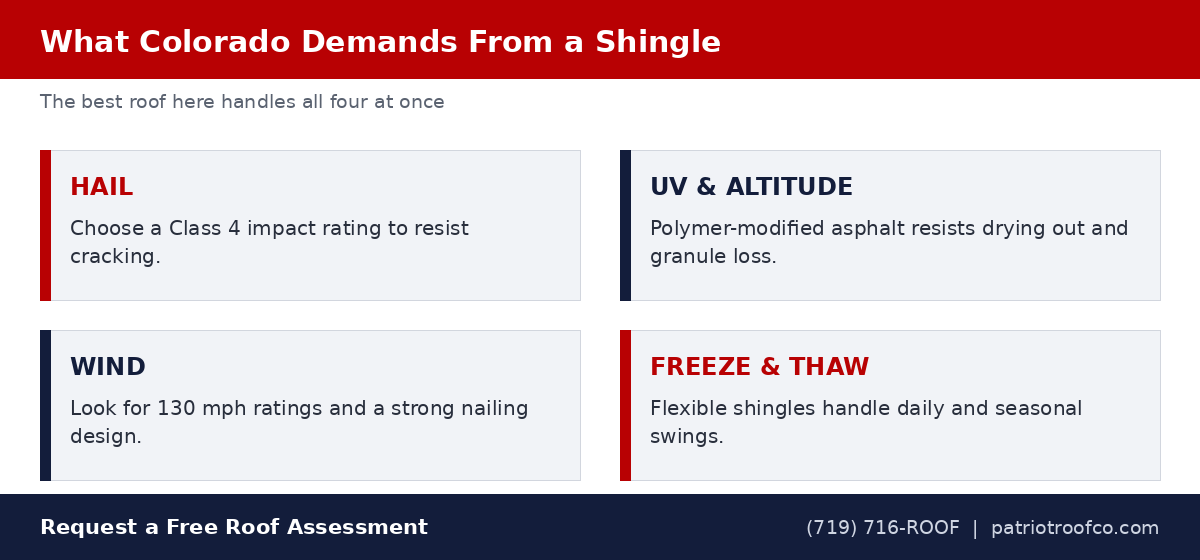
Hail is the headline threat, and it is why a Class 4 impact rating matters. But the quieter killer is altitude. At elevation, there is less atmosphere to filter the sun, so UV exposure is more intense than at sea level. UV slowly breaks down the asphalt in a shingle, drying it out until it grows brittle and sheds granules. Add Colorado’s wide temperature swings, which make shingles expand and contract day and night, and the freeze-and-thaw cycles that stress every material, and you have a climate that ages a cheap shingle fast.
This is the key insight: impact resistance and UV resistance come from the same quality. A shingle that stays flexible instead of drying out resists hail cracking and UV embrittlement. That is why the best Colorado shingles tend to be polymer-modified.
Why polymer-modified shingles win here
Standard shingles harden their asphalt through oxidation, a process that can leave them prone to drying out and cracking over time. Polymer-modified shingles do it differently. They blend rubber-like polymers into the asphalt so it stays flexible across temperature swings and resists the thermal dry-out that UV and altitude accelerate.
Malarkey explains this directly in its description of NEX polymer-modified asphalt, which it says resists thermal dry-out and gives the shingle enough stretch to handle daily and seasonal expansion, including freeze-and-thaw cycles. That same flexibility is what lets the shingle absorb hail instead of shattering. Owens Corning and GAF build their top impact-resistant shingles on the same principle with SBS-modified asphalt. For a Colorado roof, that flexible build is the single most important quality to look for, and it is why we steer homeowners toward it on most asphalt shingle projects.
Our top picks for Colorado
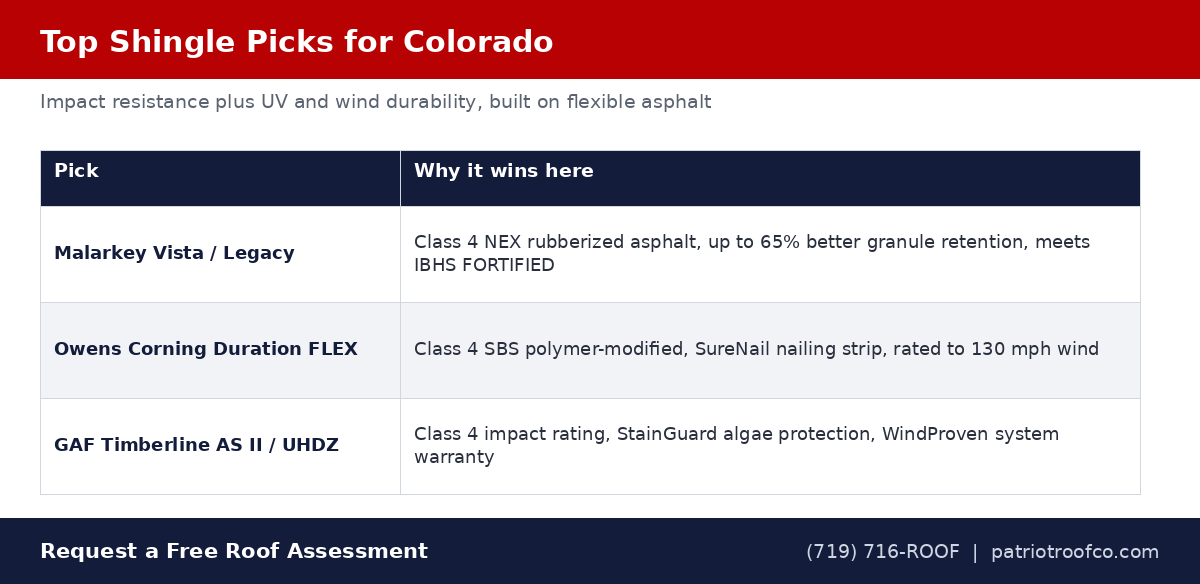
Here are the shingles we recommend most for combined impact and UV performance, and the reasoning behind each.
Malarkey Vista and Legacy
Malarkey’s Vista shingle is our frequent first recommendation for Colorado. It is Class 4 rated, built on NEX rubberized asphalt, and uses 3M ceramic granules rated for up to 65 percent better granule retention than the industry standard. Granule retention matters more than people think: the granules are the shingle’s UV shield, so holding onto them is how a roof resists our sun. Vista also meets the IBHS FORTIFIED roof standard and carries a 130 mph enhanced wind rating. The premium Legacy adds Scotchgard algae protection, useful on shaded north-facing slopes.
Owens Corning TruDefinition Duration FLEX
Owens Corning’s Class 4 option pairs an SBS polymer-modified, rubberized asphalt with its SureNail Technology, a wide reinforced nailing strip that improves wind hold, and it is rated to 130 mph. It is a strong, flexible shingle that handles impact and temperature swings well, and the SureNail design is a real advantage in Colorado’s gusty spring and fall.
GAF Timberline AS II and UHDZ
GAF’s dedicated impact-resistant Timberline AS II and its premium Timberline UHDZ both reach Class 4, with UHDZ adding StainGuard Plus PRO for 30 years of algae protection and GAF’s no-maximum-wind-speed WindProven warranty when installed as a full system. For homeowners who want a complete GAF system with strong warranty backing, these are excellent. Just remember the standard Timberline HDZ is Class 3, as GAF notes on its Class 4 shingle page, so specify the impact-rated models.
The two things people forget
Color and ventilation. Lighter shingle colors reflect more summer heat and run cooler, which slows UV aging, so a lighter shade is worth considering on a sun-blasted roof. And no shingle performs to its rating without airflow underneath it. A hot, poorly vented attic bakes the shingles from below and shortens their life no matter how good they are. Our guide to attic ventilation for Colorado roofs covers how to get that right, and it is a cheap way to protect an expensive roof.
One honest caveat
A Class 4, UV-tough shingle is the best defense Colorado roofing offers, but it is not a force field. Very large hail can still damage any shingle, and the impact rating is about resisting cracking, not preventing every dent. The shingle warranty covers manufacturing defects, not hail, which is handled through your homeowners insurance. The upside is that choosing a resilient roof may earn you a premium discount, and Colorado is adding support for resilient roofs through the grant program created under SB26-155.
Let Us Help You Choose
The right shingle depends on your home’s exposure, your budget, and your insurance goals. We install Malarkey, Owens Corning, and GAF, and we will recommend the one that fits, not the one with the biggest margin.
Request a Free Roof Assessment today by calling Patriot Roofing at (719) 716-ROOF, or reach us through our contact page. We serve Pueblo, Colorado Springs, and the Colorado Front Range.
Before you decide, check your current roof
If you are reading this because your roof is aging, it helps to know exactly where it stands first. Our guides on how to tell the age of a roof and the best time of year to replace a roof in Colorado Springs can help you plan the timing, and a quick roof inspection tells you whether you are replacing now or preparing for later. Whatever you choose, our residential roofing team and flexible roof financing are here to make the upgrade easier.
Frequently Asked Questions
What are the best shingles for Colorado?
The best Colorado shingles combine a Class 4 impact rating with a flexible, polymer-modified build that resists UV and temperature swings. Our frequent picks are Malarkey Vista and Legacy, Owens Corning TruDefinition Duration FLEX, and GAF Timberline AS II and UHDZ.
Why does altitude matter for roof shingles?
At high elevation, there is less atmosphere to filter the sun, so UV exposure is more intense. UV dries out the asphalt in a shingle over time, making it brittle and prone to granule loss. Flexible, polymer-modified shingles resist that aging better.
What does UV do to a roof?
UV radiation slowly breaks down the asphalt binder in shingles, causing them to dry out, lose granules, and grow brittle. Since granules are the shingle’s UV shield, products with better granule retention hold up longer in Colorado’s intense high-altitude sun.
Are polymer-modified shingles better for Colorado?
Generally, yes. Polymer-modified shingles keep the asphalt flexible instead of letting it harden and crack. That flexibility helps them absorb hail and resist the UV and freeze-thaw stress that ages standard shingles faster at altitude.
Do I need Class 4 shingles in Colorado?
They are strongly recommended. Colorado sits in a high hail-frequency zone, and Class 4 shingles resist hail cracking far better than standard shingles. They can also qualify for an insurance premium discount, though the amount varies by carrier.
Does shingle color affect how long a roof lasts in Colorado?
It can help. Lighter colors reflect more summer heat and run cooler, which slows UV aging of the shingle. On a roof with heavy sun exposure, a lighter shade is worth considering alongside a quality impact-rated product.
How long do good shingles last in Colorado?
A quality impact-resistant, UV-tough shingle typically lasts around 25 to 30 years here, though hail events and attic ventilation affect the real number. Standard shingles age faster under our sun and storms, which is why the upgrade often pays off.
Does attic ventilation affect shingle life?
Yes, significantly. A hot, poorly vented attic bakes shingles from below and shortens their life regardless of their rating. Proper intake and exhaust ventilation keeps the roof deck cooler and helps your shingles reach their rated lifespan.
Which shingle has the best granule retention?
Among our picks, Malarkey Vista stands out, with 3M ceramic granules rated for up to 65 percent better retention than the industry standard. Strong granule retention is important in Colorado because the granules are what protect the shingle from UV.
Will the best shingles stop all hail damage?
No. The best Class 4 shingles greatly reduce hail damage but cannot prevent all of it. Very large hail can still harm any roof, and the impact rating allows for cosmetic dents. Hail damage is covered by your homeowners insurance, not the shingle warranty.
Request a Free Roof Assessment
Ready to choose a shingle built for Colorado’s hail and sun? We will help you weigh the options for your home. Request a Free Roof Assessment today by calling Patriot Roofing at (719) 716-ROOF, or reach us through our contact page. We serve Pueblo, Colorado Springs, and the Front Range with residential roofing, metal roofing, and free roof inspections. Your Roof, Our Honor.